
Table of Contents
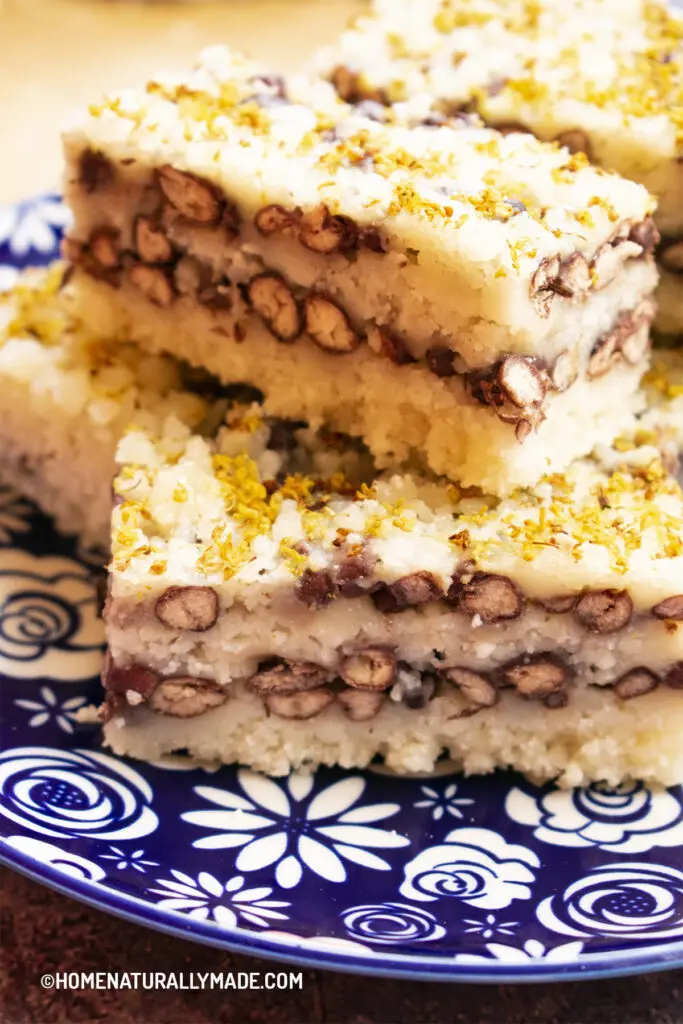
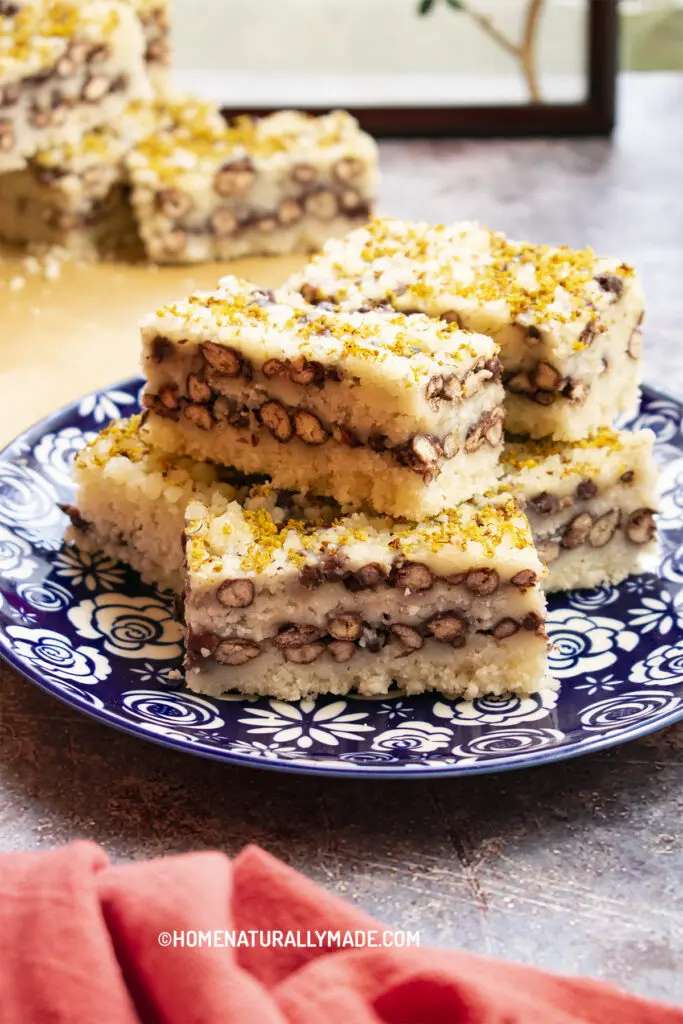
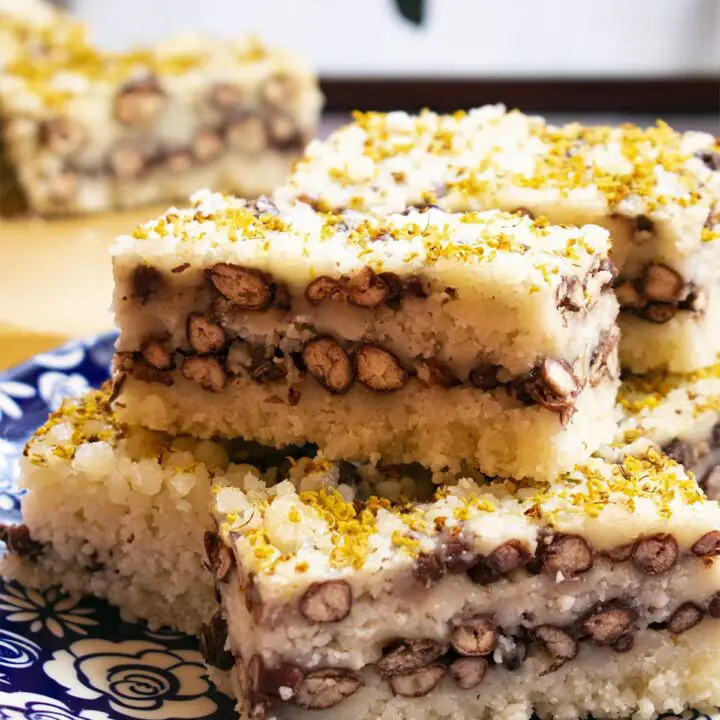
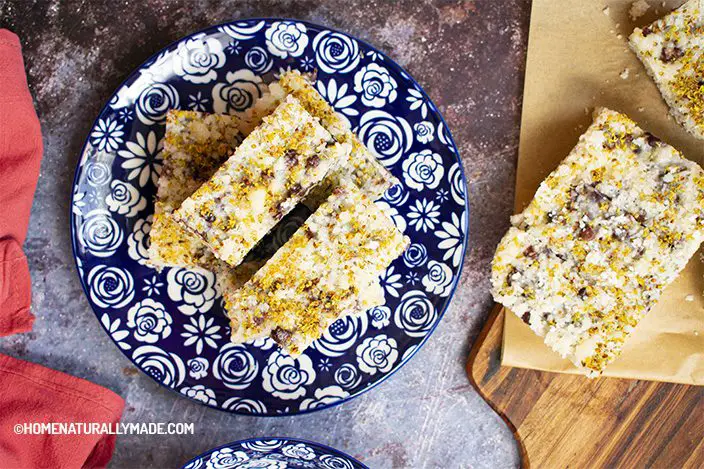
Red Bean Rice Cake {Song Gao 松糕} is a naturally gluten-free and egg-free sponge rice cake that’s wonderfully satisfying in both flavor and texture. Made with whole adzuki beans and a blend of sweet rice flour and rice flour, it delivers a delicate chew with a soft spongy bite.
A beloved traditional food from my hometown Suzhou, this Red Bean Sponge Rice Cake strikes a perfect balance between tenderness and pleasant chewiness. The whole red beans are the star of this iconic Suzhou-style treat adding a firm, satisfying bite amid the cake’s airy texture.
You may notice the beautiful golden garnish on top – these are osmanthus flowers or Gui Hua {桂花} in Chinese. Their tiny blossoms carry a sweet, fragrant aroma that gently perfumes the dessert. In classic Huaiyang-style dim sum (Dian Xin 点心), osmanthus flowers are often used as a delicate finishing touch.
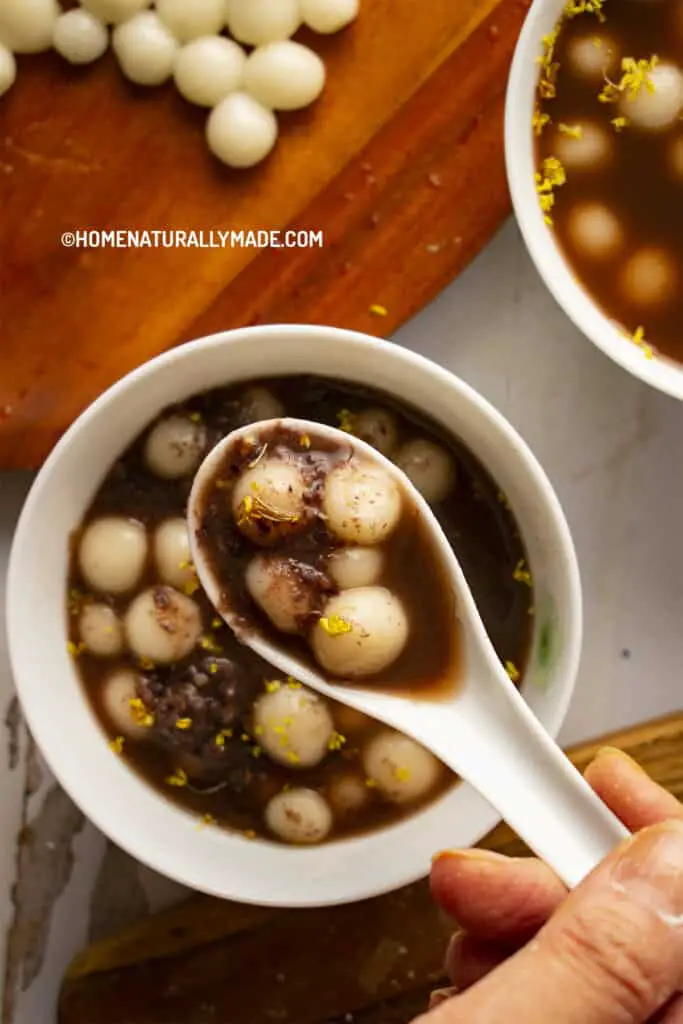
Curious about osmanthus and how to use it in desserts? Read more here – including ways to incorporate it into Red Bean Mochi Soup or Hong Dou Xiao Yuan Zi {红豆小圆子}
Rice and Rice Flour – Fun Facts
Rice has been a traditional staple food in many parts of Southeast Asia and East Asia since ancient times. Today, it comes in countless varieties with different colors, shapes, aromas, and textures.
When you look specifically at texture, rice can broadly be grouped into two categories – rice that cooks up soft and fluffy, and rice that has a naturally chewy, sticky bite.
The soft, non-chewy type is what we typically call regular rice. The chewy variety is known as sticky rice, sweet rice, or nuo mi {糯米}.
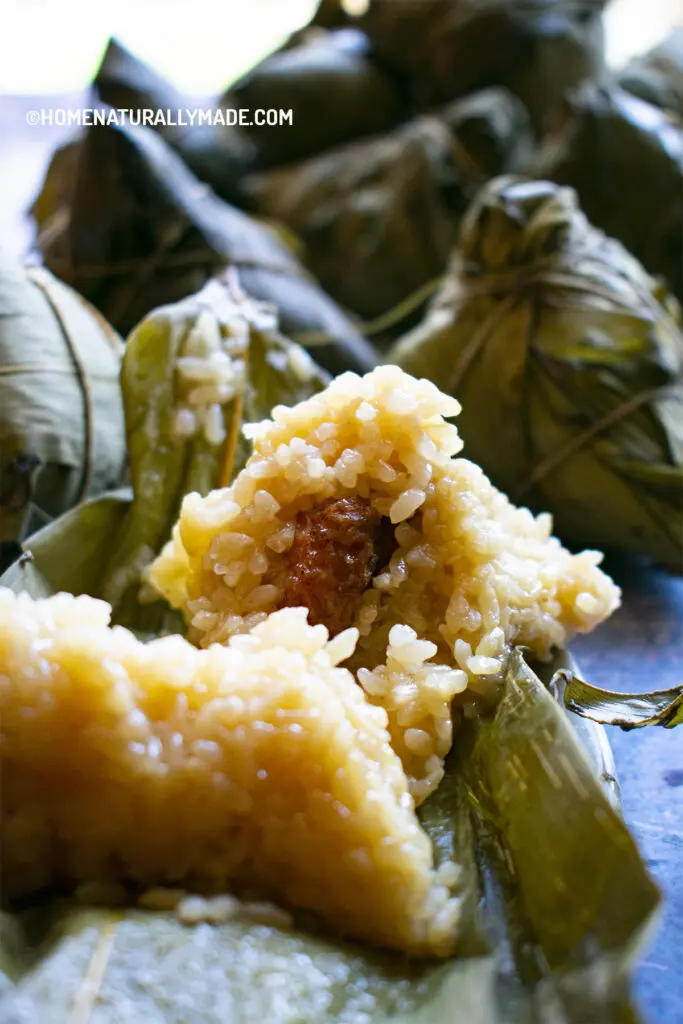
Sticky Rice is especially beloved in China, particularly in the Yangtze River Delta region, home to the naturally delicate Huaiyang cuisine. Some of the most popular sticky-rice dishes include savory Sticky Rice Dumplings {zongzi 粽子} filled with pork, as well as Shanghai-style shumai {shao mai 烧卖}, both celebrated fro their fragrant, satisfying chew.
Of course, people also have been grinding sweet rice into flour to make a wide variety of delicious foods since ancient times. One traditional method involves soaking the sweet rice for several hours and then grinding it in a stone ill while submerged in water. This water-milled sweet rice flour becomes extra smooth and fine in texture, which is the secret behind the soft, delicate chew of sweet rice flour dumplings {Tang Yuan 汤圆} or the Red Bean Mochi Soup.
How to Use Different Types of Rice Flour for the Perfect Read Bean Rice Cake?
In this classic Red Bean Sponge Rice Cake { Hong Dou Song Gao {红豆松糕}, I use a combination of sticky rice four and regular rice flour. Adjusting the ratio between the two affects the cake’s texture – softness, chewiness, and sponginess and bites. The more sticky rice flour you use, the softer and chewier the rice cake becomes. A 50-50 is a good starting point for a balanced cake with pleasantly firm yet chewy bite.
What is the Secrete Behind the Sponginess of Rice Cake?
You might be wondering – if this sponge rice cake doesn’t use eggs, baking soda, or yeast, what creates its light, spongy texture?
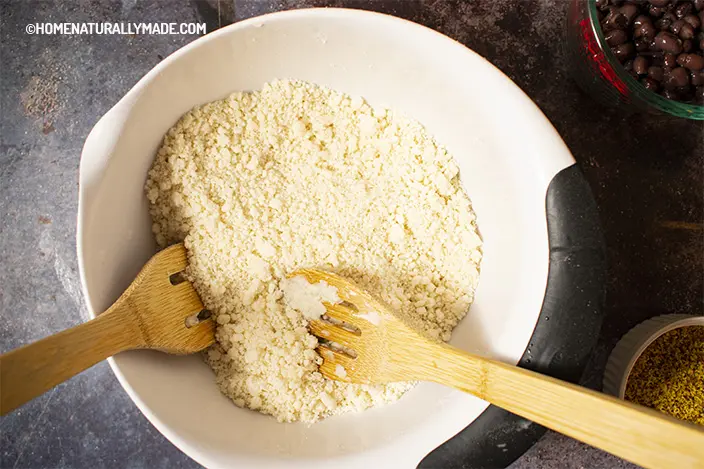
The answer lies in the remarkable culinary wisdom of the ancient Chinese people of the Yangtze River Delta, a region celebrated for its refined food and artistic culture and for having produced many renowned scholars over centuries. Over time, they discovered a unique property of rice flour: when it is fully saturated with water – just enough for it to form loose, tiny lumps – something magical happens during steaming.
These delicate clumps expand and set into an ultra-soft, airy sponge texture, giving the rice cake its signature fluffiness without any leavening agents.
Song Gao {Sponge Rice Cake} and Sesame Song Gao work out the same way.
How to Make Read Bean Sponge Rice Cake
Tip No.1 – Cook adzuki beans in advance
Adzuki beans – often called “red beans” – are a delicious and nutritious food. Chinese adzuki beans are typically small, similar in size to mung beans. These variety is known as Chi Xiao Dou {赤小豆} in Chinese, which literally means “bright red little beans.”
For this recipe, however, the larger-sized adzuki beans work better because they create a more visually appealing appearance in the cake.
Soak the adzuki beans in plenty of water overnight, then slow-cook them in a a cast-iron stockpot {Dutch oven }. A clay pot or a tri-ply stainless steel stockpot also works well. These types of cookware retain heat evenly, which helps the beans cook through gently and uniformly.
Tip No.2 – Layer the loose, water-saturated rice flour with the cooked adzuki beans
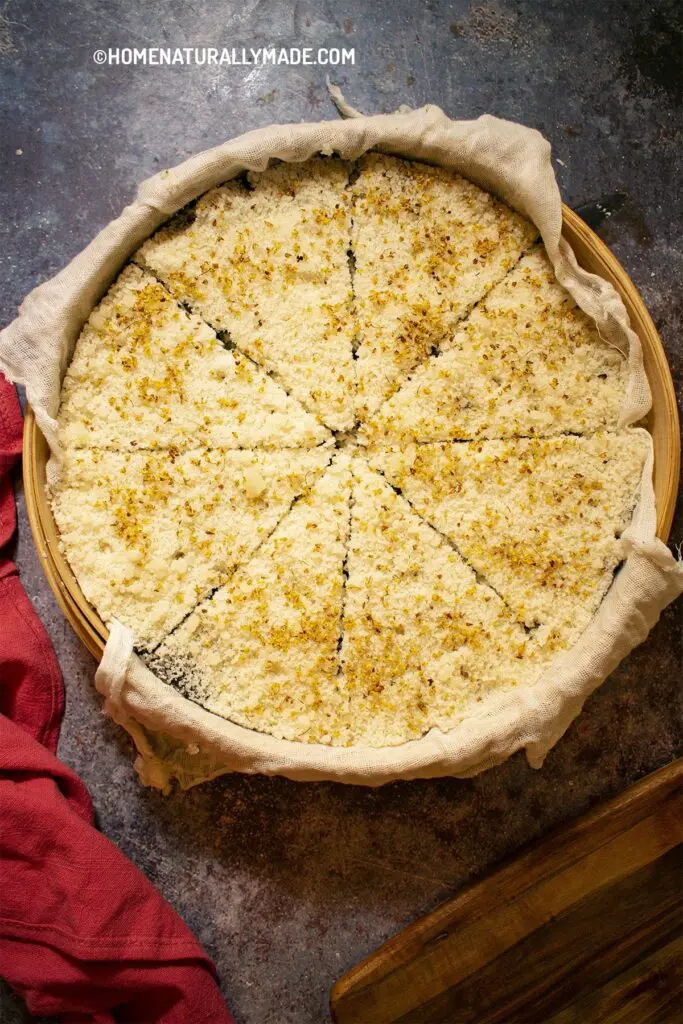
Line a bamboo steamer with cheesecloth, then sprinkle in the loose rice-flour blend, adding it one thin layer at a time until a thick, even layer forms. Use a dough scraper to gently level the surface – but do not press or compact it, as this would reduce the cake’s fluffiness.
Alternate layers: one layer of the rice flour, followed by a layer of cooked adzuki beans. Finish with a light sprinkle of dried osmanthus flowers on top.
Tip No. 3 – Steam the rice cake in a bamboo steamer
The saturated rice flour relies on ample steam to cook fully, which makes sense a bamboo steamer lined with cheesecloth ideal. Using a glassware or other non-steaming vessels may result in undercooked rice flour.
Enjoy this naturally delicious, soft, and fragrant Red Bean Sponge Rice Cake!
Red Bean Rice Cake {Song Bao} Recipe {Huai Yang Style}
Red Bean Rice Cake, a gluten-free and egg-free sponge cake is so naturally yummy, satisfying, and easy to make. It features whole adzuki beans and a combination of sweet rice flour and rice flour.
Ingredients
- 400 g combination of sweet rice flour and rice flour, adjust the ratio to accomplish different texture and flavor:
- Option 1 - 250 g (60%) sweet rice flour, 150 g (40%) rice flour for a semi-chewy texture and flavor
- Option 2 - 200 g (50%) sweet rice flour, 200 g (50%) rice flour for less chewy texture and flavor
- Option 3 - 150 g (40%) sweet rice flour, 250 g (60%) rice flour for a clear firm bite texture and flavor
- 1.5 cups adzuki beans, soak overnight before cooking
- 1/2 cup sweet rice flour, just enough to coat cooked adzuki beans for filling
- 70 g cane sugar, organic unrefined preferred
- 160 g - 200 g water, chilled or room temperature, see notes
- 2 tbsp dried osmanthus flowers, optional
Instructions
Recommended Cookware: Bamboo steamers lined with cheesecloth, paired with a cast iron wok.
Cook Adzuki Beans In Advance:
- Soak adzuki beans in plenty of water in a large bowl overnight.
- Rinse the beans and add transfer them to a Dutch oven or tri-ply stockpot.
- Add about 6 cups of water, bring it to a boil, then reduce heat to simmer and cook gently for 1 hour.
- Using a spider strainer, remove the cooked beans immediately and let them cool on a plate.
- Save the cooking liquid, add a bit of sugar and enjoy it as a lightly sweetened snack soup.
Prepare the Bean-Flour Mixture:
- In a mixing bowl, combine the cooked adzuki beans with 1/2 cup sweet rice flour.
- Using bamboo spatulas, toss the beans gently until each bean is fully coated with the flour. Set aside.
Prepare the Cake Batter:
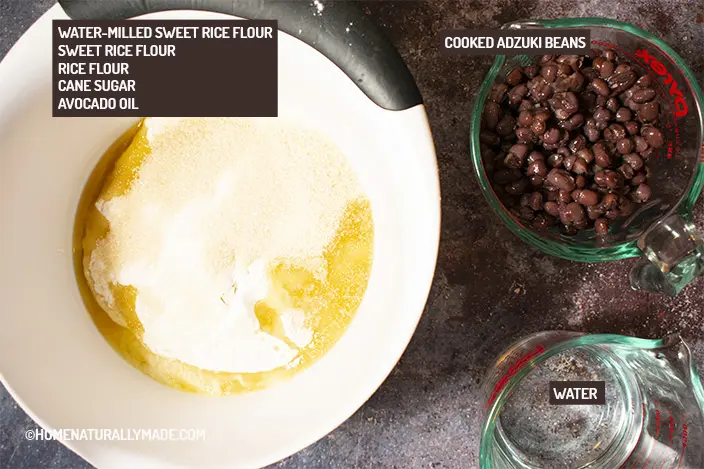
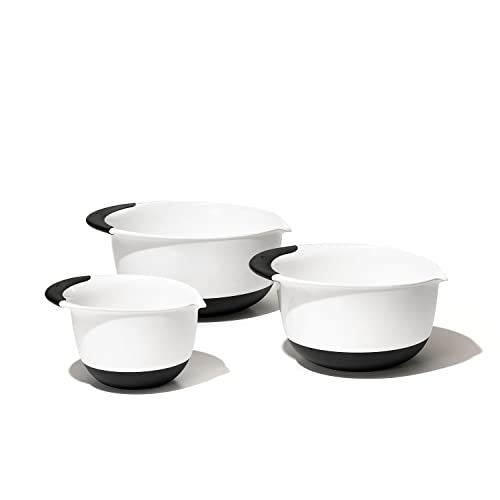
- In a marge mixing bowl, weight and combine sweet rice flour, rice flour, and sugar.
- In a small bowl, meansure 1 tbsp dried osmanthus flowers.
- measure 200 g water in a 2-cup measuring cup.
- Gradually add water to teh flour mixture in a circular motion, starting with about 1/2 cup at a time. Immediately use a pair of bamboo spatulas to toss and combine. Once the mixture begins to come together, reduce the amount of water added to 1/4 cup at a time, and finally 2 tablespoons, mixing thoroughly after each addition, until the flour is fully saturated and just starting to form clumps.

- Stop when the flour is fully saturated and clumps start to form; you may not need the full 200 g water.
Assemble the Cake in the Steamer:
- Line a 12 inch bamboo steamer with cheesecloth, leaving some overhang. (Two-ply cheesecloth works best for steaming rice cakes.)
- Sprinkle in the loose rice-flour blen, adding it one thin layer at a time until a thick, even layer forms. A flat, large wooden spoon works best to scoop out the rice-flour blend and sprinkle evenly over the cheesecloth. Avoid compacting the mixture to preserve teh light and fluffy texture.
- Add a layer of adzuki beans and sweet rice flour mixture.
- Top with another layer of the rice flour blend.
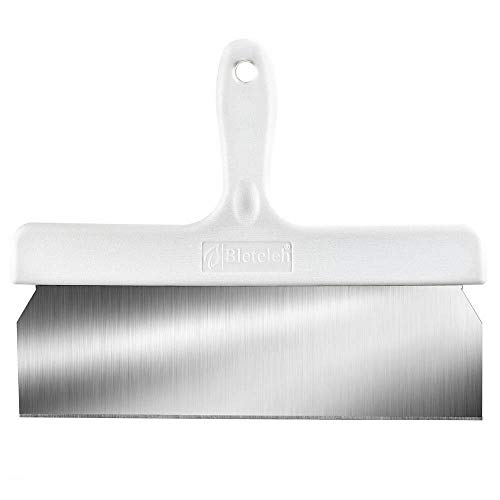
- Gently level the top with a dough cutter - do not compact, to ensure a light and fluffy texture.
- Fold the overhanging cheesecloth over the top of the batter.
- Evenly sprinkle the dried osmanthus flowers on top.
Steam the Red Bean Rice Cake:
- Add 6 cups of water to a 14-inch wok and bring it to a boil.
- Place the bamboo steamer onto the wok. it should sit securely without a steaming rack.
- Cover the bamboo lid and steam for 35 minutes.
- Turn off the heat and wait for 5 minutes before removing the bamboo steamer from the wok.
- Wait an additional 30 minutes before lifting the lid. Carefully remove the rice cake from the steamer and place it on a wire rack. The cake should separate easily from the cheesecloth while still warm.
Serve:
- Let the rice cake cool completely before cutting into serving sizes.
- Rice cakes are easier to slice once firmed up., but still soft and tender inside.
Notes
- Use bamboo spatulas and gentle folding to avoid breaking the beans or compressing the batter.
- Do not over-saturate the flour with water—adding gradually gives you better control.
- If desired, the leftover adzuki bean cooking liquid can be served warm as a sweet soup.
- The magic of this rice cake lies in the rice flour: when it is saturated - but not flooded with water - it forms a springy sponge during steaming, creating the deliciously spongy and chewy texture. That's why it is important to add water gradually, in small amounts.
- The saturated rice flour relies on ample steam to cook fully, which makes sense a bamboo steamer lined with cheesecloth ideal. Using a glassware or other non-steaming vessels may result in undercooked rice flour.
- The bamboo lid also allows excess steam to escape, preventing water from dripping onto the rice cake and ensure an even, light texture.
Recommended Products
As an Amazon Associate, I earn a small amount of commission from the qualifying purchases.




Nutrition Information
Yield 12 Serving Size 1Amount Per Serving Calories 76Total Fat 0gSaturated Fat 0gUnsaturated Fat 0gSodium 4mgCarbohydrates 16gFiber 3gSugar 6gProtein 3g